


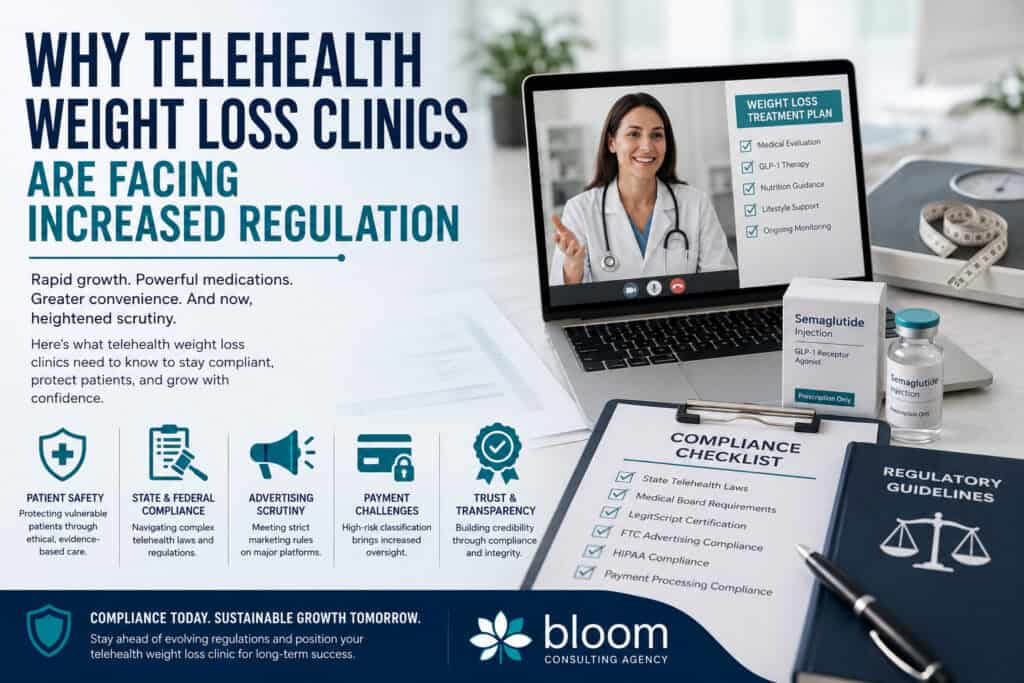
Telehealth weight loss clinics have experienced exponential growth in recent years by offering patients the convenience of virtual consultations, personalized care, and access to innovative treatments like GLP-1 receptor agonists (such as Semaglutide and Wegovy). While this burgeoning market presents immense opportunities, it is also drawing heightened regulatory scrutiny from governmental agencies, telehealth platforms, and payment processors.
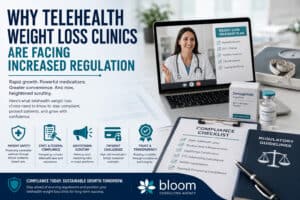
At Bloom Consulting Agency, we understand that navigating complex and evolving regulations can be daunting for providers operating in this space. If you run or plan to open a company in this space, understanding why telehealth weight loss clinics are facing increased regulation in 2026 and how to stay compliant is essential for protecting your business and ensuring sustainable growth. Below, we’ll explore the key factors driving increased regulatory oversight, discuss the risks associated with noncompliance, and offer actionable steps to help you align your operations with industry standards.
The Rise of Telehealth Weight Loss Clinics
The Rise of Telehealth Weight Loss Clinics
The demand for telehealth services has surged since the COVID-19 pandemic as patients increasingly seek convenient, remote access to healthcare. Weight loss clinics, in particular, have flourished by combining virtual consultations with evidence-based treatments that address widespread concerns such as obesity and metabolic disorders.
This shift has become a lasting trend rather than a temporary response to the pandemic. According to FAIR Health, telehealth utilization continued to grow in 2024, increasing nationally from 4.78% of all medical claim lines in January to 4.89% in June, demonstrating that patients continue to embrace virtual care as a routine part of healthcare delivery. As telemedicine adoption continues to expand, regulators, payment processors, and advertising platforms have responded with increased oversight to ensure providers operate safely, ethically, and in compliance with healthcare regulations.
Factors Behind the Telehealth Weight Loss Boom in 2026
GLP-1 Medications and Obesity Management
The recent FDA approval of GLP-1 receptor agonists, like Semaglutide (marketed under names like Wegovy and Ozempic), has fueled massive interest in medically supervised weight loss programs. These medications have been shown to provide significant, measurable results, making them highly attractive to patients.
The Convenience of Telehealth
Patients now expect the convenience of online appointments, eliminating the need for in-person visits. Virtual weight loss clinics meet this demand by offering consultations, prescription access, and ongoing monitoring through digital platforms.
Increased Marketing Opportunities
With digital advertising becoming more accessible, weight loss clinics have leveraged social media, search engines, and other online platforms to reach new audiences. However, this has also triggered greater scrutiny, as regulators and platforms like Google and Facebook impose stringent requirements on advertising healthcare services.
Why Are Telehealth Weight Loss Clinics Facing Increased Regulation?
While the telehealth model offers legitimate benefits to patients, the rapid proliferation of virtual weight loss clinics has also introduced risks. Regulatory agencies are stepping in to address concerns related to public safety, ethical marketing practices, and compliance with state, federal, and platform-specific guidelines.
The Rising Popularity of GLP-1 Drugs
Medications like Semaglutide and Wegovy have turned telehealth weight loss clinics into high-demand service providers. However, prescribing these medications is not without risk. Regulators are closely monitoring:
- Off-Label Use: Weight loss clinics may be tempted to prescribe GLP-1 medications for unapproved uses, leading to potential misuse and patient harm.
- Patient Screening Practices: Inadequate screening or patient assessments before prescribing these medications can increase liability and raise red flags for regulators.
- Healthcare Fraud: The high cost of these medications has led to increased attention from insurers and regulators to ensure practices are billing appropriately and avoiding fraudulent activity.
Compliance With State-Specific Telehealth Laws
Each state has its own laws governing telehealth services, and these regulations can vary widely. For example, some states require a prior in-person consultation before telehealth services can begin, while others impose limits on what medications can be prescribed remotely.
Weight loss clinics offering services across state lines must ensure compliance with multiple state medical board requirements, a challenge that federal regulators are eager to monitor more closely to avoid gaps in oversight.
Vulnerable Patient Populations Require Protection
Weight loss clinics often target patients grappling with sensitive medical conditions, such as obesity or eating disorders. Regulators place significant emphasis on ensuring vulnerable populations are protected from:
- Misleading Claims: Advertising “guaranteed results” or “quick fixes” violates FTC advertising laws and erodes trust.
- Unethical Pricing Practices: Clinics must avoid predatory pricing or enrolling patients in expensive subscription models without full transparency.
To learn more about FTC advertising requirements, visit this FTC resource on Truth in Advertising.
Increased Scrutiny on Marketing Practices
Telehealth weight loss clinics face strict advertising restrictions across digital platforms like Google, Facebook, and Instagram. These platforms require clinics to:
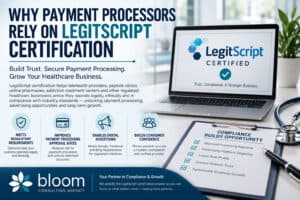
- Obtain LegitScript Certification: LegitScript verifies telehealth providers’ compliance with healthcare advertising laws. Without this certification, your ads may be restricted or suspended.
- Avoid Misleading Language: Ads promoting dramatic weight-loss claims or publishing before-and-after photos could inadvertently violate platform policies.
If your clinic fails to comply, not only could you lose access to critical advertising channels, but you may also face financial penalties or legal repercussions.
Payment Processing Complications
Telehealth weight loss clinics often struggle to obtain merchant accounts due to their classification as high-risk businesses. Payment processors are wary of potential compliance violations, chargeback risks, and licensing gaps. Securing a LegitScript-certified merchant account helps address these concerns, but the process can be complex without professional guidance.
At Bloom Consulting Agency, we specialize in helping telehealth weight loss clinics navigate merchant account setup and compliance requirements, ensuring your payment processing remains secure.
What Are The Risks of Noncompliance for Telehealth Weight Loss & Peptide Clinics?
Failing to stay compliant with growing regulations can have serious consequences for your clinic. These include:
- Legal Penalties:
Noncompliance with FDA, FTC, or state telehealth laws can result in financial penalties or, worse, the permanent shutdown of your clinic. - Loss of Platform Access:
Without certifications like LegitScript, your clinic risks being banned or restricted from advertising on platforms like Google and Facebook, limiting your ability to acquire patients. - Reputational Damage:
Noncompliance and unethical practices can tarnish your clinic’s reputation, eroding trust among current and prospective patients. - Merchant Account Terminations:
Payment processors may suspend or terminate your accounts if they detect violations, leaving your clinic unable to accept patient payments.
Proactive Steps to Deal With The Increased Regulations That Telehealth Weight Loss Clinics Are Facing
Operating a telehealth weight loss clinic in today’s regulatory environment requires a proactive approach. Here are some ways Bloom Consulting Agency can help your clinic stay compliant while continuing to grow:
1. LegitScript Certification
We guide you through the LegitScript certification process, ensuring your weight loss clinic meets industry compliance standards for advertising, payment processing, and more.
2. Advertising Compliance Reviews
Bloom Consulting helps evaluate your advertising campaigns for potential regulatory pitfalls. From ad copy to landing pages, we ensure your marketing efforts align with FTC and platform-specific laws.
3. State-by-State Compliance Audit
If your telehealth clinic operates in multiple states, we provide a tailored compliance audit to ensure alignment with relevant state telehealth laws and medical board requirements.
4. Merchant Account Setup
Securing a merchant account for high-risk businesses like weight loss clinics can be challenging. We’ll connect you with processors experienced in working with regulated industries and assist in negotiating favorable terms.
5. Patient Education Materials
Regulators value transparency. We’ll help you develop patient-facing content, such as informed consent forms and treatment guides, that promote ethical practices while fostering trust.
Partner With Bloom Consulting Agency to Navigate Increased Regulation
At Bloom Consulting Agency, we specialize in helping telehealth weight loss clinics navigate the evolving regulatory landscape. From securing certifications like LegitScript to building compliant advertising strategies, we provide support that empowers your business to thrive without compromising on integrity.
Operating in a highly regulated industry requires vigilance, but with the right guidance, your clinic can grow responsibly and sustainably.
Together, we’ll build a compliant foundation for long-term success.