






When it comes to advertising healthcare services online, choosing the right platform can make or break the success of your marketing efforts. Navigating the landscape of Healthcare Google Ads vs Facebook Ads involves understanding both platforms’ complexities, from compliance requirements to audience reach and advertising goals. At Bloom Consulting Agency, we specialize in helping healthcare providers, including those in regulated industries like hormone therapy, peptides, and medical weight loss, identify and leverage the platforms that deliver sustainable, compliant results.
In this article, we’ll break down the critical differences between Google Ads and Facebook Ads, explore the unique considerations healthcare advertisers must keep in mind, and help you make informed decisions to maximize your advertising ROI while adhering to legal and ethical standards.
Why Advertising Platforms Matter in Healthcare
Healthcare advertising is unlike any other industry. The high level of regulation, coupled with the sensitive nature of many healthcare services, makes choosing the right platform essential to your success. Google Ads and Facebook Ads are the most used online advertising platforms, but each offers distinct advantages—and challenges—for healthcare businesses.
The stakes are high: non-compliance with advertising policies can result in ad rejections, account suspensions, or even penalties. For businesses in highly scrutinized industries, such as telehealth, weight loss, or hormone optimization, understanding platform-specific rules is crucial. Bloom Consulting Agency works alongside healthcare organizations to ensure compliance is baked into their advertising strategies, allowing businesses to focus on reaching their intended audiences without fear of disruption.
Google Ads: The Power of Intent-Driven Search
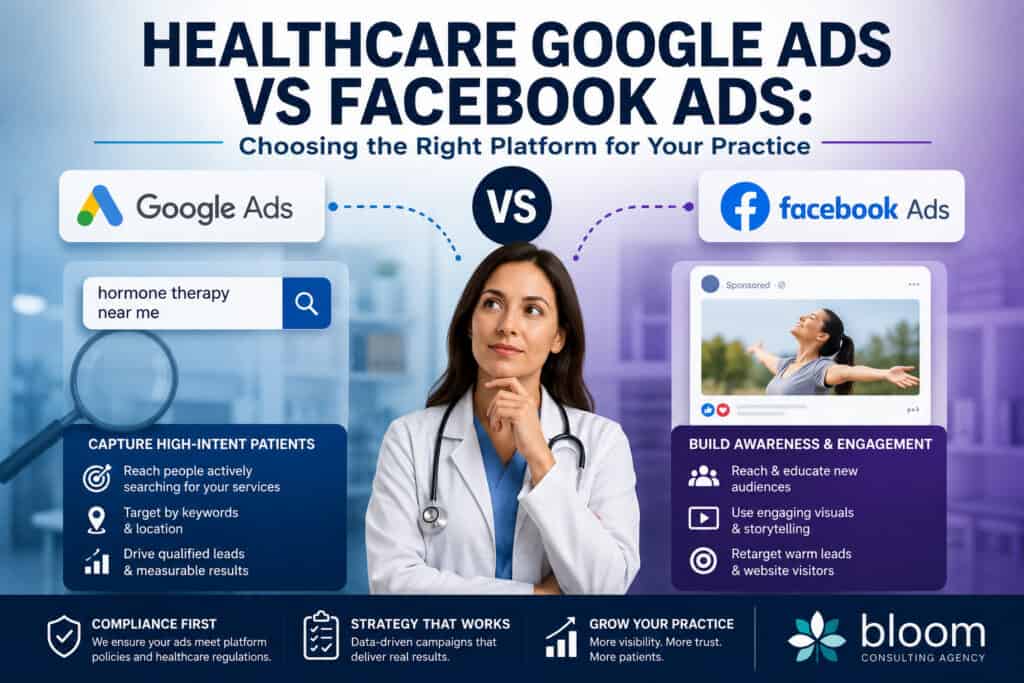
Google Ads is the gold standard for capturing high-intent traffic. Potential patients searching for services like “IV therapy in [your city]” or “hormone therapy clinic near me” are clearly in need of care, making them more likely to convert into patients.
Advantages of Google Ads for Healthcare
- High Purchase Intent
Google dominates as the search platform of choice for healthcare consumers actively seeking solutions. The ability to target keywords means your ads can appear precisely when potential patients are searching for services you offer. - Customizable Ad Targeting
With options to target by location, demographics, and even search history, Google Ads allows for incredibly granular targeting. This ensures your ad budgets are directed toward the right audience. - Scalability
Whether you’re a single-location clinic or a multi-state telemedicine provider, Google Ads campaigns can scale to match your growth without sacrificing precision. - Direct Lead Generation
By targeting high-conversion keywords and integrating compliant landing pages, Google Ads drives direct inquiries and measurable results more effectively than other platforms.
Challenges You’ll Face on Google Ads
Operating in healthcare comes with strict scrutiny. Google Ads’ healthcare advertising policies are stringent, particularly for services like peptides, hormone therapy, and weight loss programs. To succeed, you’ll need:
- Compliant Ad Copy & Landing Pages
Ads and landing pages must adhere to Google’s standards, avoiding unsubstantiated claims, misleading language, or impermissible references to personal health attributes. - Higher CPC in Competitive Markets
The average cost-per-click (CPC) ranges from $8–$25+, and in competitive areas, these costs can soar. While greater intent typically justifies this spend, precise targeting and campaign optimization are crucial to avoid waste.
Bloom’s Recommendation for Google Ads
For healthcare businesses, Google Ads should serve as the primary advertising platform due to its unparalleled ability to capture high-intent traffic. However, success requires vigilance in complying with Google’s stringent policies, as well as ongoing optimization to ensure competitive ROI.
Facebook Ads: The Awareness Platform
In contrast to Google Ads’ focus on intent-driven searches, Facebook Ads (under Meta platforms, including Instagram) excels in creating awareness among potential patients who may not yet be actively searching for care. While Meta Ads offer robust audience segmentation and visually engaging formats, the platform presents some unique hurdles for healthcare advertisers.
Opportunities for Healthcare Marketing on Facebook
- Top-of-Funnel Awareness
Facebook is ideal for spreading awareness about your practice, educating audiences about your services, and promoting your brand. - Visual Storytelling
With media-rich solutions like video and carousel ads, Facebook offers plenty of opportunities to provide engaging, patient-centered storytelling and educational content. - Robust Retargeting Capabilities
Facebook Ads shine when combined with remarketing strategies to re-engage website visitors, email subscribers, or warm leads who may need an extra touchpoint before converting.
Compliance Challenges on Facebook Ads
Healthcare advertisers often encounter significant obstacles when advertising on Meta platforms.
- Strict Ad Policies
Meta heavily restricts advertisements related to sensitive health topics, including weight loss, hormone optimization, and medical conditions. For example, ads cannot:- Directly reference specific medical conditions.
- Imply a user’s personal health status or transformation (“You’re struggling with…”).
- Show drastic before-and-after images.
- Approval Uncertainty
Many healthcare ads are flagged for approval, even when efforts are made to comply with advertising guidelines. This can delay campaigns and reduce predictability. - CPM Pricing Model
While average CPMs (cost per 1,000 impressions) range from $15–$40+, these costs can climb based on audience targeting and creative. Additionally, less predictable conversions make Facebook Ads less effective for direct lead generation without a well-crafted sales funnel.
Bloom’s Recommendation for Facebook Ads
We generally recommend avoiding Facebook Ads as a primary acquisition channel in healthcare verticals unless used strategically for brand awareness or remarketing campaigns. While Meta can support top-of-funnel activity, such as educating your audience or building trust, significant compliance restrictions make it difficult to achieve reliable or scalable conversions directly from this platform.
Comparing Costs: Google Ads vs Facebook Ads
Cost is always a critical consideration, particularly for clinics and healthcare businesses with strict marketing budgets.
- Google Ads CPCs: $8–$25+
Google often costs more per click but delivers higher ROI due to the targeting of users with active purchase intent. - Facebook Ads CPMs: $15–$40+
Facebook may have less expensive CPMs but often requires more ad spend across the funnel to achieve conversions.
Cost Summary of Google Ads vs Facebook Ads: Efficient spending depends on your campaign goals. For driving leads in healthcare, Google Ads is more cost-effective long-term, whereas Facebook works best for awareness and engagement.
Platform Strategies: How Bloom Consulting Supports Your Ads
At Bloom Consulting Agency, we specialize in helping healthcare organizations navigate the increasingly complex world of digital advertising. From addiction treatment centers and telehealth providers to medical practices, behavioral health organizations, and specialty clinics, we understand the unique challenges that come with promoting healthcare services online. Strict platform policies, evolving regulations, and industry-specific compliance requirements can make it difficult to launch and maintain successful healthcare campaigns without risking ad disapprovals or account suspensions.
Our team combines healthcare marketing expertise with deep knowledge of compliance standards, including Google Ads policies, Meta advertising guidelines, HIPAA considerations, and LegitScript requirements. By taking a compliance-first approach, we help clients build advertising campaigns that not only generate qualified leads but also protect their long-term ability to advertise. Every strategy is designed to maximize return on investment while maintaining the trust of both advertising platforms and prospective patients.
How We Maximize Results on Google Ads
Keyword Research That Captures Intent
We define and target high-conversion keywords specific to your services, specialties, and target markets, ensuring your ads reach users actively searching for the care or solutions you provide.
Landing Page Optimization for Compliance
Your ad copy and landing pages are carefully reviewed and optimized to meet Google’s advertising policies and applicable healthcare regulations, improving both Quality Score and conversion potential.
Campaign Monitoring
Our team continuously monitors campaign performance, adjusts bidding strategies, refines targeting, and responds to policy updates or market changes to keep your campaigns competitive and effective.
How We Improve Facebook Ads Performance
Careful Creative Execution
We develop compelling, compliant ad creative and messaging that captures attention while adhering to Meta’s healthcare advertising policies.
Retargeting Strategies
By focusing on warm audiences—such as previous website visitors, engaged social media users, and email subscribers—we improve conversion rates and maximize return on ad spend.
Brand Awareness Growth
We use educational content, patient success stories, provider spotlights, and thought leadership campaigns to build brand recognition and credibility over time, helping healthcare organizations establish trust long before a prospective patient is ready to convert.
The Verdict: Healthcare Google Ads vs Facebook Ads
If you’re deciding between Healthcare Google Ads vs Facebook Ads, the right choice ultimately depends on your advertising objectives:
- Choose Google Ads for Direct Lead Generation: Its ability to target high-intent searches makes it the top choice for healthcare organizations seeking immediate inquiries and measurable conversions.
- Leverage Facebook Ads for Awareness: While Facebook is less effective for direct lead generation, it does provide significant value for running branding campaigns and retargeting past leads.
As a healthcare advertiser, you must also prioritize compliance, cost efficiency, and tailored messaging—three areas where Bloom Consulting Agency excels.
Partner with Bloom Consulting to Turn Compliance into a Competitive Advantage Within Healthcare Advertising
At Bloom Consulting Agency, we provide strategic, compliance-driven support for healthcare-focused advertising campaigns. From managing Google Ads to approaching Facebook Ads strategically, our team ensures you reach the right audience, stay compliant, and achieve meaningful ROI.
Looking for more resources on healthcare advertising? Learn more here.